Rope, Diesel and Gulls: A Morning on Dorset's Working Quaysides
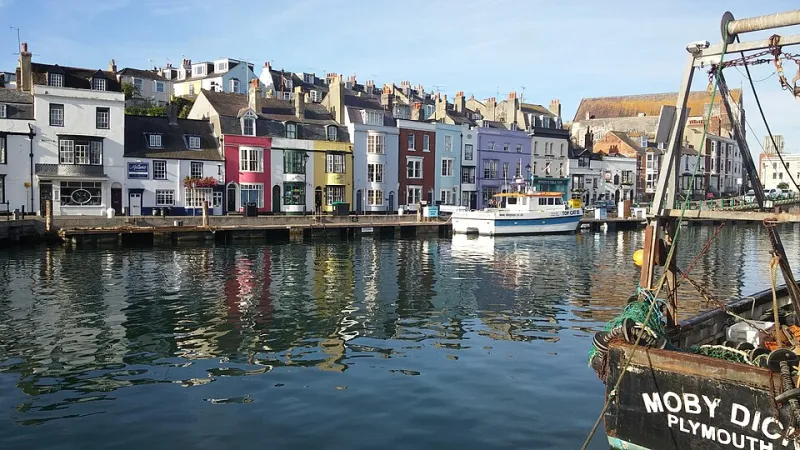
Photo: Andrew Bone from Weymouth, England, CC BY 2.0, via Wikimedia Commons
Six forty in the morning on Poole Quay, and the town is not yet awake in any sense a visitor would recognise. The gulls are, though. The gulls are always awake. A man in orange is hosing something down with great purpose. Two boats are talking to each other in diesel, low and grumbling, and somewhere behind you a bakery is putting out the first trays and filling the entire street with the smell.
This is the hour worth setting an alarm for. Not because anything dramatic happens — it rarely does — but because a working quay at seven in the morning is a different place from the same quay at eleven, and there's a pleasure in seeing a place before it has put its visitor face on.
Poole Quay, early
Poole has been a working harbour for centuries and still behaves like one. The fishing fleet is smaller than it was, but it's there, and the boats come and go on their own timetable, not yours. Watch the unloading from a distance and you'll see a kind of brisk, practised choreography: crates, ice, a hand signal, a van reversing.
The best place to stand is slightly back from the edge, along the railings near the old town, where you're out of the flow of anyone who has a job to do. Coffee is available early if you know where to look, and the first ferries to Brownsea and the Studland side start moving not long after — a useful reminder that this is still a port, not a museum.
Arriving car-free: Poole is straightforward from anywhere on the South Western main line, and the quay is a short, signposted walk from the station. Come off an early train and you'll be standing with the gulls before the shops have opened.
Weymouth Harbour, and the bridge that lifts
Weymouth's harbour is the most theatrical of the Dorset quaysides, simply because of the town bridge. When it lifts, everything stops — traffic, pedestrians, the whole day's momentum — and a yacht slides through the gap with someone on deck pretending not to enjoy it. Locals don't turn their heads. Everyone else does.
Earlier than that, though, the harbour belongs to the fishing side. Boats rafted up, nets being sorted, an unhurried conversation between two people who have done this a thousand mornings between them. The Esplanade side gets the sun, the harbour side gets the working boats, and the old harbour wall at the Nothe end gives you the best long view back across the water.
Stand on the quayside but not in the middle of it. Boat crews need the cobbles more than you do. Watch from the raised area or from a bench, and you'll see far more than if you're wandering about.
Lyme Regis and the Cobb
The Cobb is one of those pieces of stone that looks like it was drawn by someone with a good eye for a curve, and it's been earning its keep since long before anyone photographed it. Early morning it's quiet enough to hear the water slapping at the wall and the ropes creaking — an underrated sound, rope, and one you don't get in many places.
Mackerel boats run out of here in season, and the small wet-fish trade continues in a modest way. There's a stone jetty used by anglers and a slipway used by everyone. If you want to watch, the far end of the Cobb gives you the whole harbour mouth, and the walk out there first thing is worth the wind in your face.
Car-free: Lyme is on the bus route that runs along the coast, and the walk down from the top of the town to the harbour takes ten minutes and gives you the view on the way. Stay for breakfast at one of the places that opens early for the working trade rather than the holiday trade, and you'll eat better for less.
The smaller edges
West Bay, under its cliffs, still lands fish and still smells of it, which is reassuring. Swanage's pier and quay have a gentler rhythm — mostly crabbers and the odd dive boat. Wareham's quay is a river quay, all canoes and willows, and has the distinction of being best at about eight in the morning when the mist is still sitting on the Frome. Castletown on Portland is rough and unglamorous and entirely real, and Mudeford's sand-spit edge is where you watch the tide race through the harbour mouth like it's late for something.
None of these will entertain you for an entire day. All of them are worth twenty minutes with a coffee and no agenda.
How to watch without getting in the way
Stand back from the edge. Don't ask someone a question while they're carrying something heavy. Don't photograph faces close up without saying hello first — a working quay is a workplace, and nobody owes you a scene. If you're in the way, move before you're asked. And if someone tells you to shift, shift cheerfully; you're a guest in their morning.
Eating before nine
This is the reward. Harbourside cafés that open for the trade do a proper breakfast — bacon in a soft roll, tea in a mug that's seen things, no garnish, no smashed anything. Eat it outside if you can bear it, watch the boats, and let the day start slowly. By the time the coach parties arrive you'll have had the best hour Dorset offers, and you'll be ready to go home.