The Puddle Is Not a Puddle: A Field Guide to Dorset Place Names
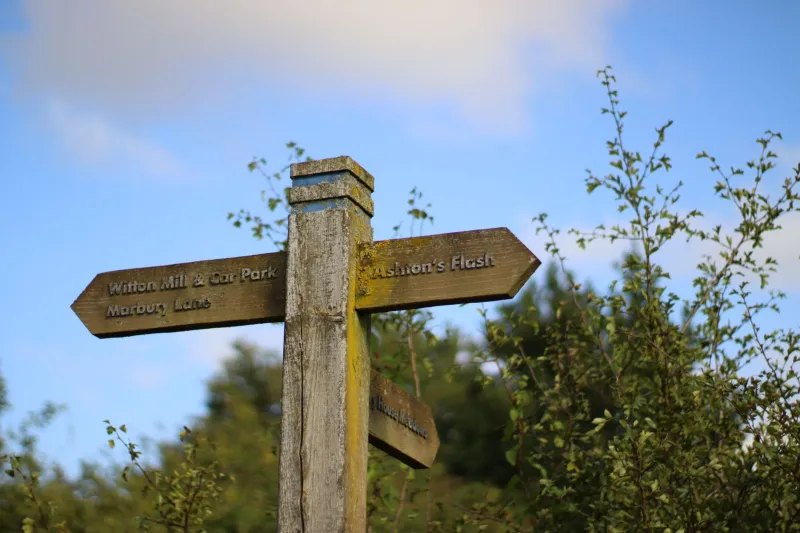
There is a particular silence that falls in a car when someone reads a Dorset signpost aloud and the pronunciation doesn’t quite land. It is not a hostile silence. It is the silence of three people quietly hoping somebody else will say “Affpuddle” first.
Dorset place names are not a test. They are a set of small, old, sometimes weirdly specific words that have survived centuries of maps, parish boundaries and bus timetables. Getting them roughly right is less about sounding local and more about enjoying where you are. And once you start listening, the names open up the landscape: puddles, springs, chalk streams, little churches, farms on a creek.
It starts at the signpost
Most of us arrive in Dorset through a place name. You turn off the A35, follow a fingerpost, and there it is: a word that looks straightforward until you try it out loud. Beaminster. Wyke Regis. Chaldon Herring. Plush.
The good news is that nobody expects perfection. The better news is that a rough attempt, delivered with a smile, is usually the start of a nice conversation. Ask at a village shop or a bus stop and you’ll get the pronunciation plus a story about the vicar, the pub, or the year the lane flooded.
Beaminster, and the business of syllables
Beaminster is a good place to begin because it looks like it should be “Bean-minster” — as if it were a weather forecast for legumes. It isn’t. Say BEM-in-ster, with the stress near the front. Locals may squash it further to something like BEM-ster, which is the verbal equivalent of taking your coat off and staying a while.
A friend once heard a visitor ask for “Bay-minster” at a Dorchester bus stop. Nobody laughed. Somebody just said, kindly, “Bem-in-ster, love,” and then told them which side of the road to wait on. That is roughly the Dorset approach: correct the name, then help with the timetable.
The puddle is literal
Affpuddle looks like a joke about rain, and in a way it is. It is AFF-pud-ul — the puddle is doing exactly what it says on the tin. Tolpuddle, home of the Martyrs, is TOL-pud-ul. Piddletrenthide is PID-ul-TRENT-hide, which sounds like a very specific instruction for a very small river.
These are not names to be embarrassed by. They are Old English leftovers, words for springs and pools and valleys, and they have a blunt poetry to them. Once you accept that the puddle is real, the rest of Dorset starts to make more sense.
When a Wyke is a Wick
Wyke Regis, on the edge of Weymouth, catches people out because “Wyke” looks fancy. It isn’t. Say WICK REE-jis. Wyke is an old word for a creek or a small farm, and it sounds like it.
Chideock, near Bridport, is CHID-ick — not “Chide-cock”, which sounds like an argument in a henhouse. Eype, just down the road, is simply EEP. Seatown is SEE-town. These are short, practical names for short, practical places, and they reward a bit of nerve.
The short glossary bit
Here is a say-it-before-you-drive-it list. It is not exhaustive, and accents vary, but it will get you past the first junction without incident.
- Beaminster — BEM-in-ster
- Affpuddle — AFF-pud-ul
- Plush — plush, as in the sofa
- Chaldon Herring — CHAWL-don HERRING
- Wyke Regis — WICK REE-jis
- Chideock — CHID-ick
- Powerstock — POR-stock
- Cerne Abbas — SURN AB-us
- Piddletrenthide — PID-ul-TRENT-hide
- Ryme Intrinseca — RIME in-TRIN-se-ka
- Iwerne Minster — YEW-ern MIN-ster
- Symondsbury — SI-monds-bree
- Eype — EEP
- Bere Regis — BEER REE-jis
- Whitchurch Canonicorum — WIT-church ka-NON-i-KOR-um
- Sutton Poyntz — SUT-un POYNTS
Plush deserves a special mention. It is a tiny village in the Piddle valley, home to The Brace of Pheasants, and its name is pronounced exactly like the word for a soft furnishing. There is no elaborate local twist. The twist is that you are in a village called Plush, eating lunch, and the signpost outside is completely serious about it.
The ones that catch locals out too
Chaldon Herring is a lovely example of a name that looks more complicated than it sounds. CHAWL-don HERRING — the first part rhymes with “fallen”, the second is the fish. Ryme Intrinseca is a small village with a name that sounds like a legal clause, and it is pronounced RIME in-TRIN-se-ka. Whitchurch Canonicorum, near the Marshwood Vale, is a proper mouthful, but it is also one of the most rewarding names in Dorset: WIT-church ka-NON-i-KOR-um.
Even people who have lived here for years have a name that makes them pause. That is fine. Dorset is not a pronunciation exam. It is a county with a lot of old words in it, and the words have had time to settle into their own shapes.
What getting it right actually buys you
Not much, in a practical sense. You will still find the beach. The pub will still serve you lunch. But a decent attempt at the name is a small signal that you are paying attention, and in a county this fond of its own corners, that tends to be rewarded.
Ask how to say Chaldon Herring and you might get directions to the Sailor’s Return. Ask about Powerstock and someone will mention the walks above the village. Say Affpuddle properly and you might be told which lane is best for blackberries in September. The name is the opener; the rest is Dorset.
So say it before you drive it. Have a go, listen to the reply, and do not worry if you need a second attempt. The puddle is not a puddle, the Wyke is a wick, and the county is much more forgiving than its signposts suggest.