Six Inland Dorset Villages Worth a Frosty Morning Detour
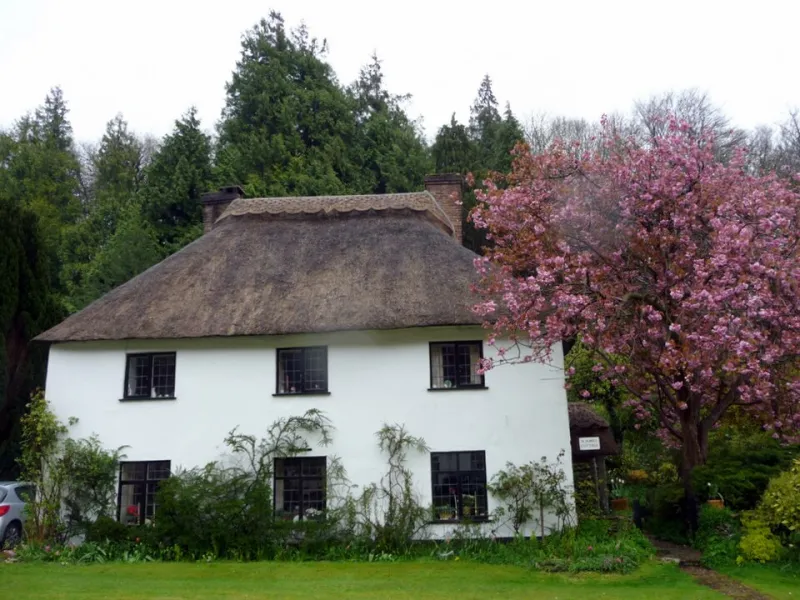
Photo: Christine Matthews , CC BY-SA 2.0, via Wikimedia Commons
There is a certain kind of Dorset morning in late autumn when the vales hold their breath. Frost sits in the hollows, the hedges are down to their bones, and the lanes have that rinsed, empty look. This is the moment to point the car inland.
Dorset's coast gets the postcards, and fair enough. But the county's middle, all chalk downland and clay vales, black-and-white cottages and slightly apologetic village shops, is where you notice how much of Dorset is actually farmland, churchyard and long view. Below are six inland villages that make a genuinely good detour, ideally on a weekday when the only other people about are someone walking a dog and a delivery van reversing badly.
Milton Abbas: the village that was moved
Start here, because nowhere else in Dorset tells its story so plainly. In the 1770s the old town was cleared to give the Abbey its parkland, and a new village was built along the valley: identical thatched cottages, each with its own bit of garden, strung out like beads on a string.
Walk the village street slowly, then take the short footpath up to the Abbey and back round, an hour at most. St James's church is worth a look, and the village shop and post office is the sort of place where the conversation at the counter is half the stock. The Hambro Arms does a decent lunch if you have timed it right.
Fontmell Magna: downland on the doorstep
A quietly handsome village of stone and thatch, with a churchyard that catches the frost beautifully and, just above it, Fontmell Down. The climb is short and sharp and lands you on turf with views across to Shaftesbury and, on a clear morning, a long way further.
This is a fine place to walk a two-mile loop before the day properly starts. After that, the village has a shop and a pub, and Compton Abbas airfield is a few minutes away if you fancy watching small planes potter about while you drink tea.
Tarrant Monkton: the valley of the Tarrant
There are several Tarrants in this valley, all strung along the same chalk stream, and Monkton is the prettiest of them. Thatched cottages, a ford, a church with a squat tower, and a river so clear you can count the gravel.
The walk along the valley to Tarrant Launceston and back is flat, gentle and about two miles, which makes it perfect for a morning when the ground is frozen and the air stings. The Langton Arms is the obvious stop for lunch, and the surrounding lanes are some of the quietest in the county for a bike.
Plush: four cottages and a very good pub
Calling Plush a village is generous, but it has what matters: a handful of cottages, a green, a stream and the Brace of Pheasants, a pub that has been quietly getting on with it for centuries. The church sits up on the hill above, reached by a steep path that rewards you with a view over the valley.
Park considerately, because there is not much room and the residents have heard every joke about the name. A short loop of two to three miles takes in the church and returns through fields, and in frost the whole thing looks like a woodcut.
Powerstock: church on a hill, common below
Another small place with more landscape than buildings. The church of St Mary sits up on its mound, reached by a steep, walled path from the village, and the walk up through the churchyard on a cold morning is quietly bracing.
Below the village, Powerstock Common and Eggardon Hill offer longer routes if the day has opened out. A village store, a pub with a fire and no particular hurry about any of it: this is inland Dorset in miniature.
Ashmore: the highest village in the county
Up on Cranborne Chase, Ashmore sits around a duck pond at the top of the chalk, and on a frosty morning it can easily be two degrees colder than anywhere else you have been that day. The church of St Nicholas is small, old and full of light, and the lanes around it run out into beech hangers and wide, bare fields.
There is no shop and no pub, so plan accordingly: bring a flask, and call in at Cranborne on the way home for the village store, the church and a very good lunch indeed.
A gentle case for going slowly
None of these places have attractions, in the leaflet sense. There is no visitor centre, no audio guide, often nowhere obvious to spend money. What they have instead is the thing that makes rural Dorset worth the drive: a churchyard with three centuries of surnames in it, a shop that closes at half four, a footpath sign pointing at a gap in a hedge.
In August you would rush them, because the beach is waiting. In November there is nothing to rush to. Give a village ninety minutes, walk the loop, buy something small from the shop, read a few headstones, and you will find the county does something for you that a car park and an ice cream never quite manage.
Practical notes, briefly. Lanes are narrow and often muddy at the edges, so drive slowly and use passing places properly. Village shops keep short, sometimes eccentric hours, so do not build a picnic around one. And if a pub looks shut, it probably is, so ring ahead rather than peering through the window in a hopeful way.